Raise Your Home on Steel Posts Across Cairns, FNQ
We lift homes across Cairns and FNQ onto steel, galvanised, or hot-dipped posts.
Damon House Relocators is a QBCC-licensed structural building relocation business serving Cairns and Far North Queensland since 1998.
What House Lifting Involves and When You Need It
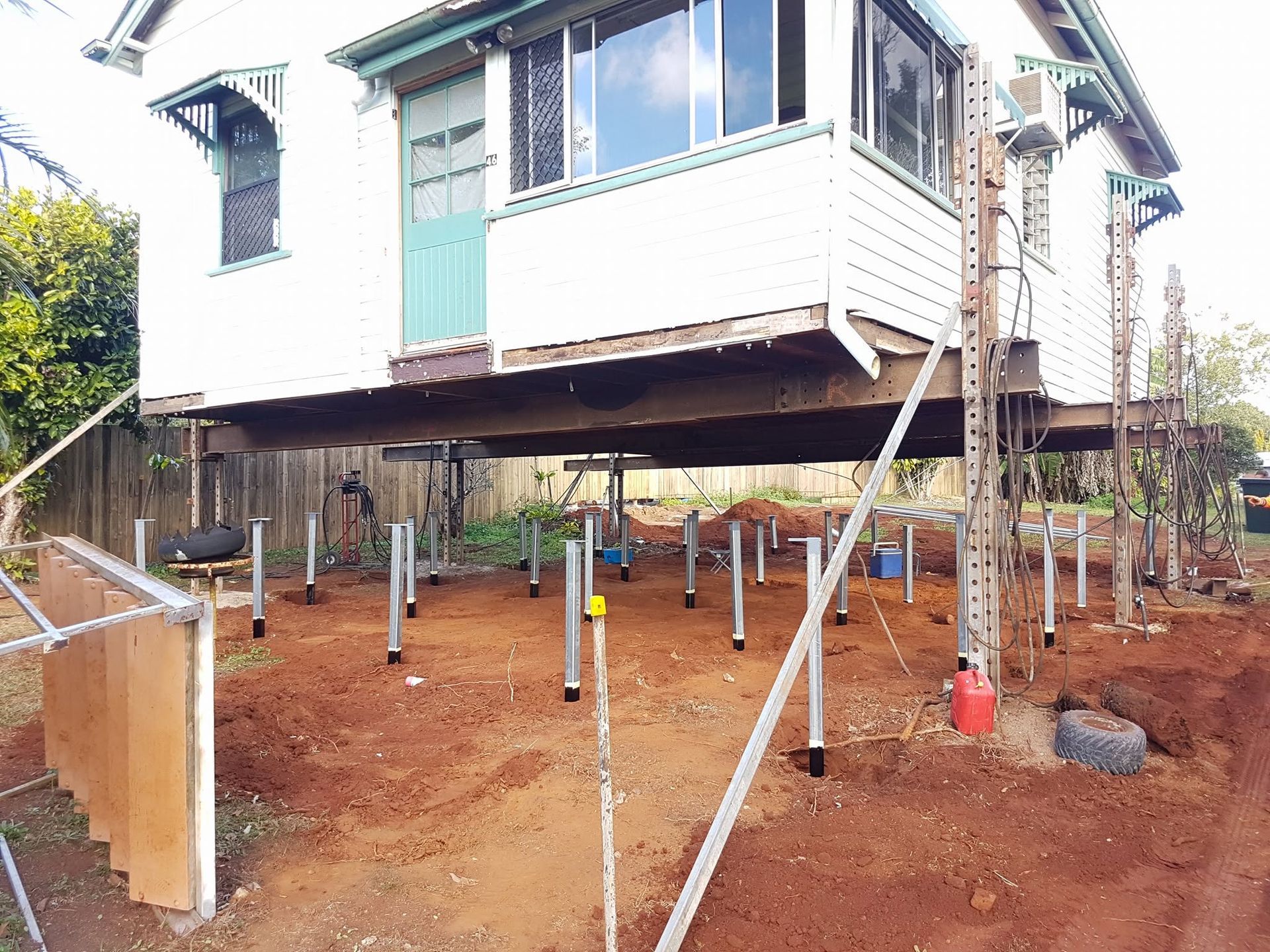
House lifting physically raises a timber-framed home from its existing bearers to a new height, typically 50 cm to several metres, using hydraulic lifting equipment. Existing stumps or posts are then replaced with steel, galvanised, or hot-dipped posts rated for the site conditions. This is distinct from restumping, which replaces posts at the existing height without raising the home.
Flood Resilience for Far North Queensland Properties
Cairns and surrounding FNQ towns sit within declared flood plains. Lifting a home by even half a metre above Q100 flood level protects the structure, its contents, and the owner's insurance position. Councils increasingly require minimum floor heights on rebuilt or significantly altered dwellings, making a structural lift the most direct path to compliance.
Creating Usable Living Space Below the Floor
Lifting a home from its original stump height to a full 2.4 m clearance below the bearers converts the sub-floor into a legal, insurable habitable space. That might be a garage, laundry, or living room, without adding a second storey or acquiring more land. We carry out these lifts regularly across Cairns and surrounding FNQ suburbs.
Upgrading from Deteriorating Timber Stumps to Steel or Galvanised Posts
This is not standard restumping. It is a structural lift that simultaneously replaces post material and raises the home to a new height. The lift also allows full access to the bearer frame for inspection and repair before the new posts are installed, giving us the opportunity to identify and address any structural issues before the home is lowered onto its new supports.
Choosing the Right Post Type for Your FNQ Home
Steel Posts – Strong, Direct, and Cost-Effective
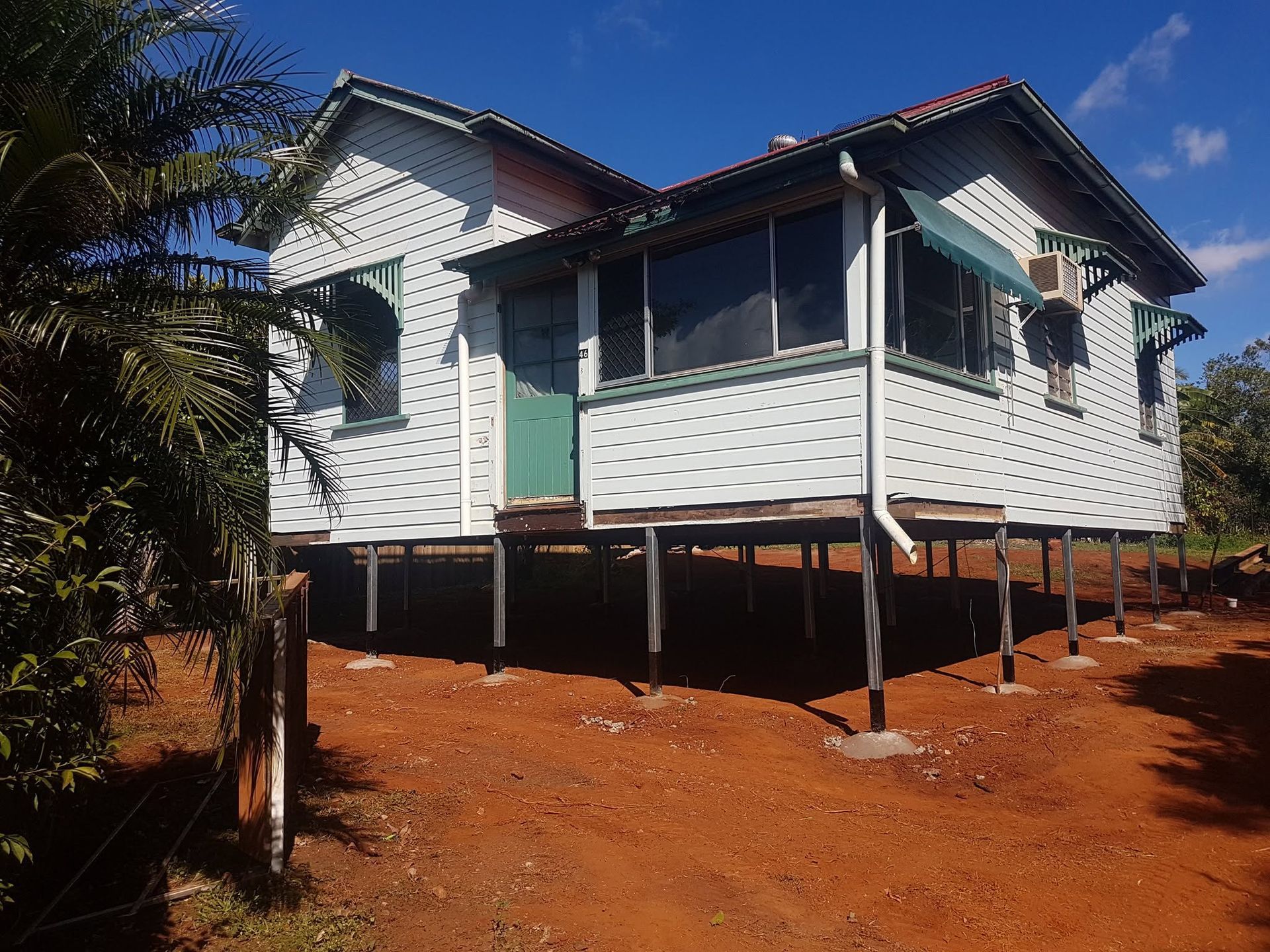
Uncoated steel RHS posts are the standard structural option for house lifting across Cairns and FNQ. They meet Queensland building code requirements for structural loads. In low-corrosion environments and on properties that allow for routine maintenance, steel posts perform reliably. In coastal or high-humidity sites, surface treatment becomes more important – which is where galvanised and hot-dipped options apply.
Galvanised Steel Posts – Corrosion Resistance for Coastal and Tropical Sites
Galvanising applies a zinc coating to the steel, significantly slowing corrosion in humid and salt-affected environments common across Port Douglas, Palm Cove, and coastal Cairns suburbs. For most FNQ residential sites, galvanised posts extend the service life of the subfloor structure without the premium cost of hot-dipped. We recommend galvanised as the minimum standard for any home within 1 km of the coast or in a classified flood-affected area.
Hot-Dipped Steel Posts – Maximum Protection for High-Exposure FNQ Sites
Hot-dipping applies a thicker, more uniform zinc layer than cold galvanising, making it the appropriate choice for homes in direct tidal or flood-inundation zones, beachfront and estuarine properties, and sites with high soil acidity – conditions found throughout the Trinity Inlet and Mission Beach corridors. Hot-dipped posts are specified by some council requirements for certain flood overlay categories. We assess the site before recommending a post type – call 0418 730 039 to discuss your specific property.
If you are unsure which post type suits your property, call us to arrange an on-site assessment before making any product decision.
The House Lifting Process from Structural Assessment to Completion
Step 1 – Structural Assessment and Quote
We visit the site, inspect the existing bearer and joist frame, assess stump condition, soil type, and access, and measure the required lift height. This assessment determines the scope of structural work, the post type recommendation, and the basis of the written quote. We carry out this assessment before any contract is signed.
Step 2 – Council Approval and Building Certification
Raising a home beyond a specified height threshold in Queensland requires a development application or building approval from the local council and a licensed building certifier. We advise on whether your project requires formal approval and can recommend experienced certifiers familiar with Cairns Regional Council and Douglas Shire Council requirements.
Step 3 – Preparation and Service Disconnection
Before lifting begins, water, electricity, and sewerage services are disconnected by the relevant licensed contractors. External steps, handrails, and any protrusions that would interfere with the lift are removed. The site is cleared and jacking positions are marked.
Step 4 – Hydraulic Lifting and Post Installation
We lift the structure incrementally using hydraulic jacks positioned at calculated bearer locations. Once the home reaches the target height, new steel, galvanised, or hot-dipped posts are installed and secured to the bearer frame and footings. The structure is lowered onto the new posts and checked for level across the full floor plate before jacks are removed.
Step 5 – Reinstatement and Final Inspection
Services are reconnected, steps and access structures are rebuilt to the new height, and a final structural inspection is carried out. We do not consider a job complete until the home is level, the new posts are fully secured, and the site is cleared of equipment and waste.
28 Years of Licensed House Lifting Across Far North Queensland
Every house lifting project in Queensland requires a licensed contractor to carry out the structural work. This is not a recommendation; it is a legal requirement under the Queensland Building and Construction Commission Act. Homeowners who engage unlicensed contractors for structural lifting work have no recourse through QBCC for defective work and may face insurance and resale complications. Damon House Relocators holds QBCC Licence #733646, verifiable at qbcc.qld.gov.au.
QBCC #733646
Verified licence – Queensland Building and Construction Commission.
Alan Damon founded the business in 1998. Richard Damon works alongside him as the second generation of the family in the trade. Alex, the third generation, is already learning at approximately 12 years old as of 2026. That continuity across three generations means we have worked on homes across Cairns and FNQ through multiple cyclone seasons, flood events, and building code revisions.
All house lifting work is covered by comprehensive structural transit insurance, public liability insurance, and contract works insurance. This coverage protects the homeowner throughout every stage of the project, from the moment we mobilise to site until the home is reinstated and services are reconnected. We can provide certificates of currency on request.
House Lifting in Cairns and FNQ – Common Questions Answered
Do I need council approval to lift my house in Cairns?
In most cases, yes. Raising a home in the Cairns Regional Council or Douglas Shire area beyond a minor threshold requires building approval from a licensed certifier and may require a development application depending on the lift height and flood overlay category. We advise on approval requirements during the initial site assessment before any contract is signed.
What is the difference between house lifting and house restumping?
House restumping replaces failing stumps at the existing floor height – the home stays at the same level. House lifting raises the entire structure to a new, higher level before new posts are installed. Lifting is the right choice when flood resilience, additional under-floor space, or a significant height change is the goal.
How long does a house lifting project take in Far North Queensland?
A typical residential lift in Cairns or surrounding FNQ takes two to five days on site, depending on floor size, post type, and whether services need to be disconnected and reconnected. Council approval, if required, adds lead time before site work begins. We give a clear project timeline in the written quote.
Is Damon House Relocators fully licensed and insured for house lifting work?
Yes. We hold QBCC Licence #733646, which authorises structural building work including house lifting across Queensland. All projects are covered by structural transit insurance, public liability insurance, and contract works insurance. We provide certificates of currency on request. Homeowners can verify our QBCC licence at qbcc.qld.gov.au.
Book a House Lifting Assessment With Damon House Relocators
Damon House Relocators is a QBCC-licensed house lifting specialist serving Cairns, Far North Queensland, and surrounding regions since 1998 – call 0418 730 039 to book your on-site assessment.
Monday to Friday 7:00am – 5:00pm | Saturday 8:00am – 12:00pm | Sunday: Closed.
6-8 Bollard Street, Portsmith QLD 4870.