
Stump Repairs and Replacement in Cairns
Individual stump failure causes floors to sag and walls to crack. Get the problem fixed before it spreads.
Available Monday to Friday 7am–5pm and Saturday 8am–12pm.
What Stump Repairs and Replacement Actually Involves
Damon House Relocators is a QBCC-licensed stump repairs and structural building relocation business serving Cairns and Far North Queensland since 1998.
Stump repair and partial replacement is targeted structural work that identifies and replaces only the stumps that are failing, rather than every stump on the property. This applies when the overall structure is sound but a section of the subfloor has been exposed to moisture damage, pest activity, or differential soil movement. It is a precision diagnosis and remediation service, not a DIY job. All work is performed under QBCC Licence #733646.
Full restumping replaces every stump across the entire subfloor and is appropriate when deterioration is widespread. Partial stump replacement targets isolated failure — one stump, a cluster of stumps in a corner, or stumps along a single bearer line. Choosing the wrong scope costs the homeowner money in either direction: a full restump where targeted repair would suffice, or targeted repair where the deterioration has already spread further than a visual inspection suggests. This is why a professional assessment by an experienced QBCC-licensed operator is the correct first step — consider full restumping if your tradesperson determines the issue is site-wide.
Warning signs of localised stump failure include a single room with noticeably bouncy or sloped floors while the rest of the house remains level, a door or window sticking only in one part of the home, visible cracking on an internal wall confined to a single zone, and stumps that appear tilted, cracked, or sunken in one area of the subfloor. These are the kinds of early indicators an experienced tradesperson recognises on site — not a checklist the homeowner can work through independently.
Stump repairs and replacement targets individual failing stumps — those that have rotted, shifted, or cracked — while leaving sound stumps in place. Full restumping replaces every stump across the whole subfloor. The right scope depends on how far the deterioration has spread, which is why an on-site assessment by a QBCC-licensed contractor is the essential first step.
How a Professional Stump Assessment Works
A stump condition assessment by Damon House Relocators is not a visual pass-over — it is a structured inspection that determines whether a stump is structurally sound, borderline, or failing. That distinction directly determines the scope of work and the cost. Getting it right at this stage prevents under-scoping, which leaves compromised stumps in place, or over-scoping, which replaces stumps that still have years of life in them.
The assessment involves visual inspection of each stump for surface cracking, splitting, and timber breakdown; probing with a metal spike to check for internal softness or hollow cores that surface appearance masks; assessing moisture exposure patterns to determine whether the stump sits in a drainage path, low-lying area, or zone with persistent seasonal wet; and checking for differential settlement, where adjacent stumps have moved at different rates and created shear stress at bearer connections. We pay particular attention to conditions specific to FNQ: tropical wet-season moisture cycles, termite activity common in the Cairns region, and alluvial soils in areas like the Mulgrave Valley that accelerate stump base deterioration.
Many homeowners delay calling because the floor movement seems minor. By the time the floor is noticeably unlevel, the stump has often been compromised for two or three wet seasons. An early assessment costs nothing to book — call 0418 730 039 — and can identify the problem while it is still a targeted repair rather than a full restump.
The Stump Repair and Replacement Process
Isolating the Affected Stumps
Once the assessment identifies the failing stumps, we mark each one and map their relationship to the bearer and joist structure above. On a partial repair, the surrounding sound stumps stay in place — only the compromised ones are removed.
Temporary Support
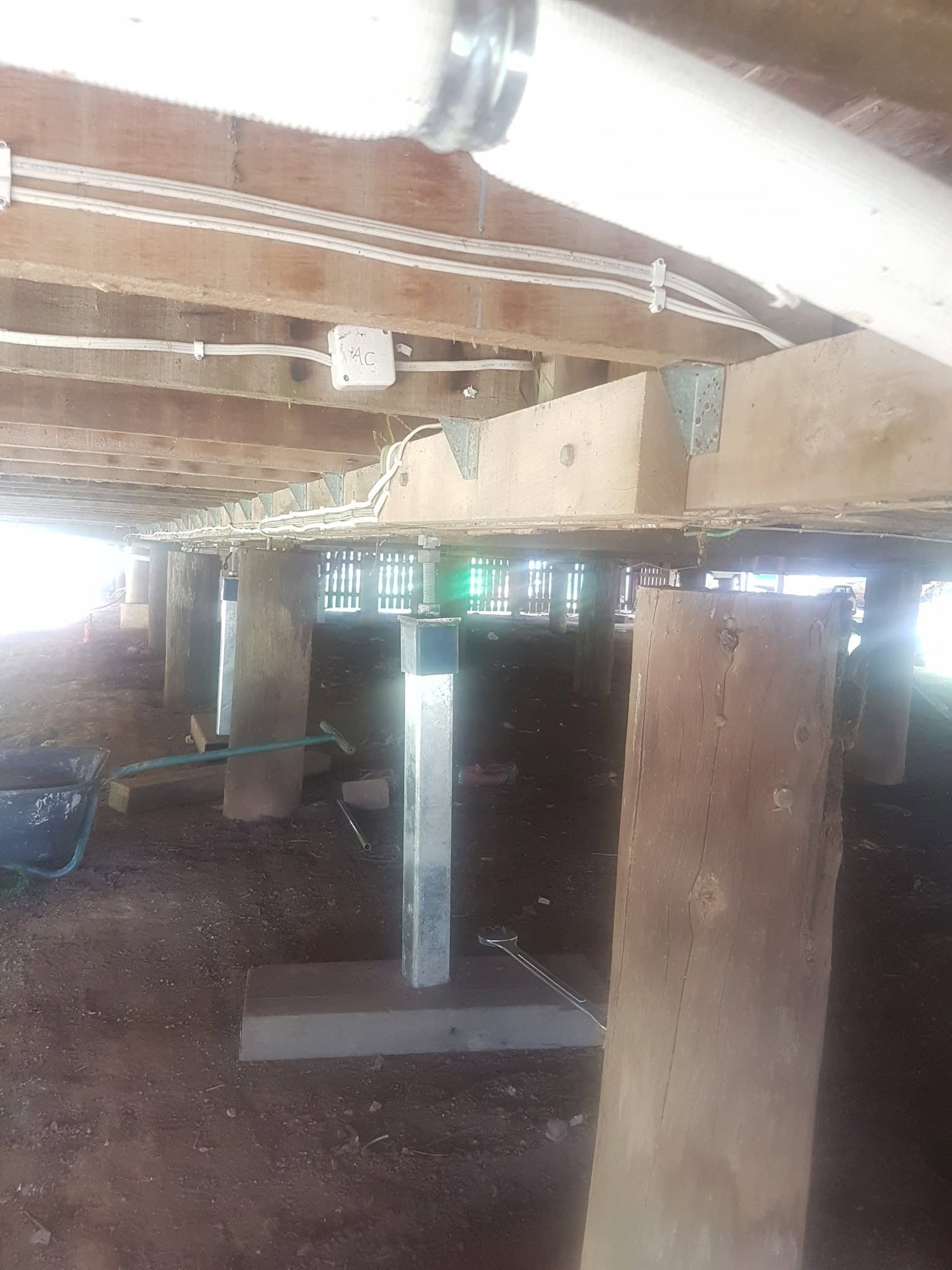
Before removing a stump, we place hydraulic jacks and temporary steel props beneath the bearers it supports, transferring the structural load safely while the stump is removed. This keeps the floor level and the building structurally stable throughout the replacement. No part of the replacement process leaves the bearer unsupported.
Removal and New Post Installation
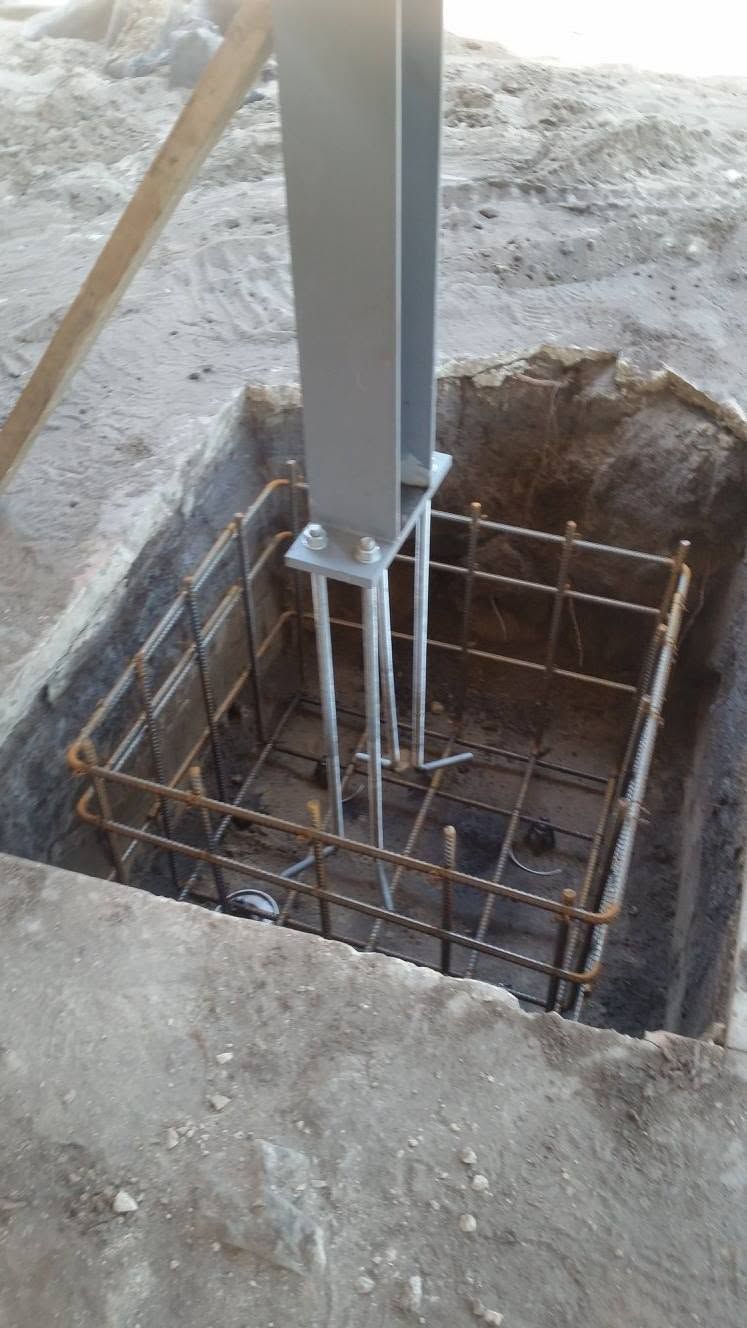
The deteriorated stump is cut out and removed. A new post — steel, galvanised, or
hot-dipped,
depending on the site's moisture exposure and the owner's preference — is set to the correct height, plumbed, and secured to the bearer. All materials used in Far North Queensland work should be rated for tropical humidity and, where appropriate, for flood-zone conditions.
Final Check and Handover
Once replacement posts are in, we remove temporary supports, check floor level across the repaired zone, and inspect adjacent stumps a second time to confirm no secondary deterioration has been missed. The homeowner receives a clear summary of what was replaced and why, so there are no surprises on the invoice.
Stump Repair Questions Answered
These are the questions Cairns homeowners most often ask before booking a stump inspection.
Is partial stump replacement ever enough, or will I eventually need a full restump?
Partial replacement is the right call when only a cluster of stumps has failed and the rest are structurally sound. It holds indefinitely if the underlying cause — moisture exposure, drainage, termite activity — is also addressed. If the cause is site-wide and the remaining stumps are borderline, a full restump may be the more cost-effective decision long term. We assess both options and give you a straight recommendation.
How do failing stumps get identified before the floor starts to move?
Most stump failure starts deep in the timber core — the surface can look intact while the inside is hollow or compacted. We probe each stump with a metal spike during the assessment: a sound stump rings solid; a compromised one feels soft or gives way under pressure. This is the only reliable way to catch failure before it shows up as floor movement.
Does stump replacement in Cairns require council approval?
Replacing like-for-like stumps on an existing residential dwelling in Cairns typically does not require a development approval from Cairns Regional Council, but it does require a licensed QBCC contractor. If you are changing the height of the home or altering the subfloor structure beyond stump replacement, council requirements may apply. We clarify the approval position for your specific property before starting any work.
Is Damon House Relocators licensed to perform targeted stump repair work specifically?
Yes. QBCC Licence #733646 covers structural building work including partial stump replacement and targeted stump repair across all residential and commercial building types we service. There is no lesser licence category for partial work — the same licensing requirement applies regardless of scope. You can verify our licence status directly on the QBCC public register at any time.
What materials do you use for replacement stumps in Far North Queensland?
We use steel, galvanised, and hot-dipped posts depending on the site's moisture exposure, flood risk, and owner preference. Timber-to-timber replacement is rarely appropriate in FNQ — the same moisture conditions that degraded the original stump will affect a new timber one. Steel and galvanised posts are rated for tropical conditions and carry a significantly longer service life in this climate.
Book a Stump Inspection Across Cairns and FNQ
Damon House Relocators has delivered licensed stump repairs and replacement across Cairns and Far North Queensland since 1998.
Every week a compromised stump carries load, it transfers that load unevenly to the bearers and joists above. Booking an inspection now costs nothing — leaving it costs structural work that a targeted repair would have avoided. Available Monday to Friday 7am–5pm and Saturday 8am–12pm.